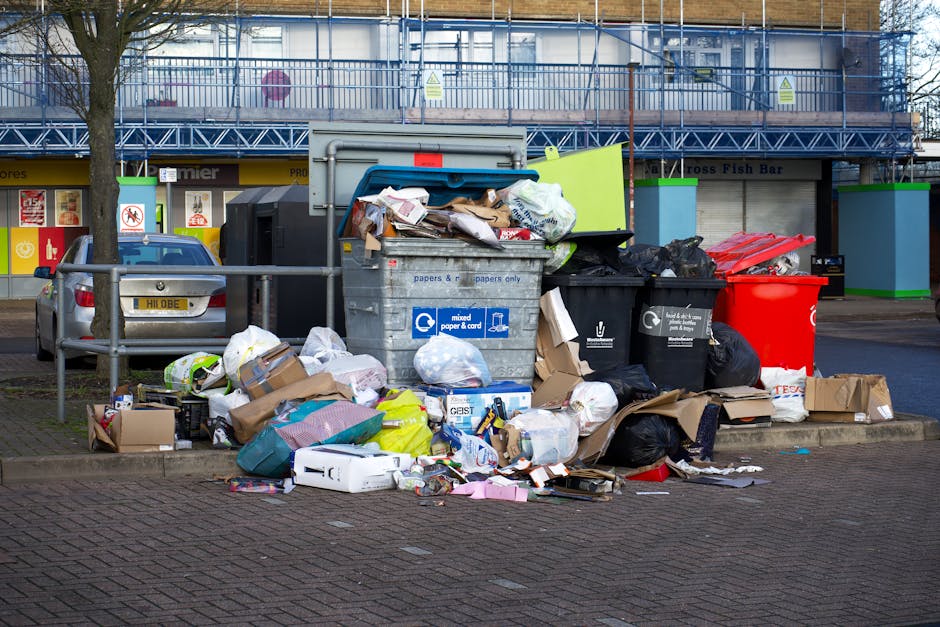
Angel N1 bulky waste collection near Islington canal
Posted on 08/05/2026
If you live, work, or manage a property around Angel N1 and you're dealing with bulky waste collection near Islington canal, you already know the problem is rarely just "getting rid of stuff." It's the stairs, the tight hallways, the parked cars, the canal-side access, the timing, and that awkward moment when a sofa suddenly feels heavier than it should. Truth be told, bulky waste has a way of turning a simple clear-out into a small logistical project.
This guide breaks down how bulky waste collection works in Angel N1, what to expect near the canal, how to choose the right disposal option, and how to avoid the common mistakes that cause delays or extra costs. Whether you're clearing one item or several rooms' worth, you'll find practical steps here that make the whole thing easier and less stressful.
For related help on wider household and site clearance needs, you may also find house clearance in London, rubbish removal in Angel, and same-day rubbish removal useful as you compare your options.

Why Angel N1 bulky waste collection near Islington canal Matters
Bulky waste collection in this part of Angel is about more than tidying up. The local streets, apartment blocks, and canal-side paths can make access tricky, especially if you're moving large items like wardrobes, mattresses, beds, broken desks, shelving, or old white goods. A good plan saves you time, avoids blocking shared spaces, and reduces the risk of damage to walls, lifts, or narrow stairwells.
Near Islington canal, the environment brings its own realities. Deliveries, cyclists, pedestrians, and tight kerbside space can all make timing matter more than people expect. A collection that works well in a suburban driveway may feel completely different in Angel. That's why a local, well-organised approach matters so much.
There's also the question of responsibility. Nobody wants a pile of unwanted furniture left beside a bin store "just for a bit" because, well, it usually becomes a lot longer than a bit. Whether you're a tenant moving out, a landlord preparing a property, or a business clearing non-office furniture, the objective is the same: remove bulky waste properly, safely, and without creating new problems.
Practical takeaway: the best bulky waste solution in Angel N1 is the one that matches access, item type, urgency, and disposal rules - not just the cheapest option on paper.
If you need a broader clearance solution, pages like office clearance and furniture disposal can help you see how bulky waste fits into a bigger clear-out plan.
How Angel N1 bulky waste collection near Islington canal Works
In simple terms, bulky waste collection is the organised removal of large items that won't fit into standard household bins. That often includes furniture, mattresses, appliances, carpets, large toys, exercise equipment, and assorted bits from a declutter or move-out. Around Angel N1, the service usually has three parts: assessment, collection, and disposal or reuse.
1. Assessment
You identify what needs removing, how much there is, and whether the collection point is easy to access. This sounds obvious, but it's the bit that saves the most hassle. A sofa on the second floor, no lift, tight turns on the stairwell? That changes everything.
2. Collection
The team arrives, loads the items, and removes them from the property or curbside. If you're near the canal, timing and parking can matter. A short loading window can be enough for a well-planned job, but poor access can turn a quick collection into a longer one.
3. Sorting and disposal
Items are then separated for reuse, recycling, or disposal where possible. Not every item can be reused, of course, but decent operators will try to divert as much as they can away from landfill. That's better for the environment and, in many cases, better for cost control too.
Some collections are simple. Others need a bit more thought. A mattress and a broken chest of drawers is one thing. A full flat clearance with mixed waste, electrical items, and awkward access is another. If you're in the second camp, it helps to look at the wider service fit, not just the headline price.
For larger or more mixed jobs, flat clearance and appliance removal may be more relevant than a basic single-item pickup.
Key Benefits and Practical Advantages
The main benefit is obvious: you get the clutter out. But the real value goes a bit deeper than that. A well-run bulky waste collection can improve safety, free up storage space, and make a property easier to live in or hand over.
- Faster space recovery: ideal when you need a room cleared before new furniture arrives or before a tenancy ends.
- Less physical strain: no wrestling with a sofa down a narrow Angel staircase at 8 in the morning. Honestly, your back will thank you.
- Better compliance: proper disposal helps avoid fly-tipping issues and keeps communal areas clear.
- Cleaner presentation: useful for landlords, letting agents, and businesses that want a property to look ready, not half-finished.
- More predictable outcome: when the service is planned well, there are fewer surprises on the day.
There's also a less visible benefit: peace of mind. If you've been staring at a broken wardrobe for three weeks and meaning to sort it out, getting it booked can lift a surprising amount of mental clutter too.
Who This Is For and When It Makes Sense
Bulky waste collection near Islington canal is useful for a wide range of people, and the reasons are usually practical rather than dramatic. You might need it if you're moving, redecorating, clearing after a tenancy, replacing old furniture, or dealing with an inherited property.
Typical situations
- Residents in flats or maisonettes: especially where lifts are small and stairwells are narrow.
- Landlords and letting agents: when a property needs to be reset between tenancies.
- Homeowners renovating: for old wardrobes, carpets, beds, and demolition-related debris that isn't mixed hazardous waste.
- Small businesses: for broken office furniture, display units, filing cabinets, or redundant fixtures.
- People with no suitable vehicle: because let's face it, most of us don't have a van waiting outside.
It makes sense when the items are too large for normal bin collection and too awkward to move by yourself. It also makes sense when time matters. If you're on a deadline, waiting for council-style collection windows or trying to borrow a friend's hatchback is rarely the smoothest route.
For people juggling a move or end-of-tenancy deadline, end of tenancy clearance can be a smart next step because it bundles the bulky waste problem into one more manageable job.
Step-by-Step Guidance
If you want the process to go smoothly, think in terms of preparation rather than just booking a pickup. The better the prep, the easier the collection day.
- List the items clearly. Write down what needs removing and group things by room. Don't forget odd items in cupboards, on balconies, or in storage cages.
- Check access carefully. Measure stair turns, door widths, lift size, and whether there's a loading point near the canal-side route or main road access.
- Separate anything special. Electricals, mattresses, and items with metal, wood, or mixed materials may need different handling.
- Take photos if the job is complex. A few clear images help avoid misunderstandings and make quoting easier.
- Choose your disposal method. Decide whether you need a same-day collection, a planned appointment, or a more comprehensive clearance.
- Prepare the space. Clear paths, open gates, and make sure communal areas are safe and not blocked.
- Confirm timings and contact details. In busy parts of Angel, a small delay can be the difference between smooth access and a frustrating wait.
- Ask what happens after collection. Reuse, recycling, and disposal should be explained plainly, without fluff.
A small but useful habit: keep one corner of the room as a "go pile." It sounds basic, but it stops items drifting back into circulation. One chair here, one lamp there, and suddenly the job looks half-done again.
If you're unsure about the type of waste you have, a general guide such as waste disposal advice can help you sort items into the right category before collection.
Expert Tips for Better Results
A few experienced habits can save real time. Not dramatic stuff. Just the kind of things people only think about after the first awkward collection has already happened.
- Book with access in mind, not just item count. Three items on the ground floor may be easier than one bulky wardrobe on the third floor.
- Keep lift use realistic. If the lift is small or shared, warn people in advance and allow extra time.
- Group similar materials together. It helps with sorting and can support recycling where facilities allow.
- Be honest about size. Oversized items are the main reason collections become difficult on arrival.
- Plan around local traffic. Around Angel and the canal, timing can matter more than you'd think, especially at busy commuter hours.
- Ask about heavy-lifting support. If the item is awkward or fragile, get clarity on whether extra handling is included.
A quick example: a tenant clearing a flat near the canal might think a sofa, rug, and old desk are easy enough. But if the route includes a tight bend, a shared entrance, and a no-parking zone outside, it's suddenly a different job. Small details. Big difference.
For recurring property management needs, it can also help to keep property clearance support on hand so you're not reinventing the wheel each time.

Common Mistakes to Avoid
Most bulky waste problems come from assumptions, not bad intentions. People assume the item will fit through the door, the collection will be quick, or the disposal route will be straightforward. Sometimes it is. Sometimes, not so much.
- Leaving items until the last minute. This is the classic one. It creates pressure and limits your options.
- Underestimating access issues. Narrow hallways, shared entrances, and canal-side parking constraints can slow everything down.
- Mixing prohibited or hazardous materials in. Paint, chemicals, and some electrical waste need separate handling.
- Not checking what the service includes. Labour, loading, recycling, and disposal are not always bundled the same way.
- Ignoring building rules. Some blocks require prior notice for collections, use of service lifts, or protected floor coverings.
- Assuming "bulky waste" means anything large. It doesn't. Some items need specialist disposal.
To be fair, people aren't trying to make life difficult. They're busy. But a little planning avoids the classic "we thought it would be fine" moment, which is rarely fine.
Tools, Resources and Recommendations
You don't need a van full of equipment to manage bulky waste well, but a few simple tools make the process much easier.
Useful tools
- Tape measure: for checking doorways, stair turns, and lift space.
- Phone camera: for clear photos of items and access routes.
- Gloves: especially if items have splinters, sharp edges, or dust.
- Labels or sticky notes: helpful when separating items by room or collection priority.
- Basic trolley or sack truck: useful only if the items are safe to move that way and the route allows it.
Practical resources to consider
- mattress disposal guidance for beds and bedroom clear-outs
- white goods removal for fridges, freezers, and washing machines
- garden waste removal if the job includes outdoor items too
- commercial waste collection for business premises near Angel
A simple recommendation: take photos before you move things around. It sounds minor, but it helps if you need quotes, need to prove what was there, or simply want to keep track of what's gone.
Law, Compliance, Standards, or Best Practice
For bulky waste collection, the main compliance principle is straightforward: waste should be handled and transferred responsibly, by a legitimate operator, and in line with UK waste-handling expectations. You don't need to memorise legislation to make a sensible decision, but you do want to avoid any service that cannot explain where the waste goes.
Good practice usually includes:
- clear item descriptions before collection
- transparent pricing and scope
- appropriate handling of electrical items and mattresses
- safe loading without damage to shared spaces
- recycling or reuse where practical
- documentation or proof of responsible removal where needed
In mixed residential areas like Angel N1, it's also important to respect communal access, loading restrictions, and neighbour convenience. That's not just courtesy. It helps prevent complaints and keeps the job moving.
If your collection includes anything unusual, such as items that may contain hazardous components, get advice first. Don't guess. Really, don't.
Options, Methods, or Comparison Table
There are several ways to deal with bulky waste near Islington canal, and the best one depends on urgency, item type, access, and how much lifting you want to do yourself.
| Option | Best for | Pros | Watch-outs |
|---|---|---|---|
| DIY removal | Small loads, easy access, available vehicle | Can be cost-effective; full control over timing | Heavy lifting, transport, disposal rules, your own time |
| Council or scheduled collection | Non-urgent household items | Simple in some cases; familiar process | May involve waiting, limits on item types or volumes |
| Private bulky waste collection | Fast turnarounds, awkward access, multiple items | Flexible, often quicker, more hands-on support | Cost varies by load size and access complexity |
| Full clearance service | Flats, houses, probate, end-of-tenancy jobs | Handles mixed items and bigger workloads | May be more than you need for a single item |
For a single chair, DIY or a simple pickup might be enough. For a whole flat near the canal, a fuller clearance service often ends up being the calmer, cleaner choice. Less running around. Less second-guessing.
Case Study or Real-World Example
Here's a realistic scenario from the kind of job that comes up often in Angel N1.
A tenant in a second-floor flat near Islington canal needed to clear a broken bed frame, a mattress, two bookcases, and a worn-out armchair before moving out. The lift was small, the hallway was tight, and the loading space outside was limited to a short window. On paper it looked like a straightforward collection. In practice, it needed care.
The useful part was the preparation. The items were grouped by room, the route from the flat to the entrance was cleared, and photos were shared in advance. That meant the collection could be planned around the access rather than discovered at the door. The whole job stayed controlled, no scuffed walls, no awkward pause in the hallway, no rush.
The lesson? The collection itself is usually the easy bit. The access, planning, and item handling are what make it feel simple.
That's especially true in canal-adjacent parts of Angel, where foot traffic, parking, and shared access can shape the job more than the items do.
Practical Checklist
Use this before booking your bulky waste collection near Islington canal.
- List every item that needs removing
- Measure doors, corridors, stair turns, and lifts
- Check whether parking or loading is available nearby
- Separate electricals, mattresses, and unusual materials
- Clear the route from the items to the exit
- Confirm your preferred collection date and time
- Ask what happens with reuse, recycling, or disposal
- Check if the building needs notice for access or lift use
- Take photos of anything large, heavy, or awkward
- Make sure valuables and keep-items are moved away first
Quick rule of thumb: if you need to say "it should be fine" more than twice, pause and check the details again. That tiny delay can save a lot of bother later.
Conclusion
Angel N1 bulky waste collection near Islington canal is at its best when it is planned around local reality: tight access, busy streets, mixed property types, and the need to get things done without upsetting the rest of the building. Whether you're clearing one awkward item or handling a broader property reset, the smart approach is the same - identify the items, check access, choose the right method, and keep the disposal route responsible.
Get those basics right and the process becomes much calmer. Not effortless, perhaps, but calm. And in a place where the streets are lively and space is precious, calm counts for a lot.
If you're ready to move from "I should sort this out" to actually getting it done, a clear quote and a properly planned collection can save time, energy, and a fair amount of stress.
Get a free quote today and see how much you can save.
Sometimes the nicest thing you can do for your home is simply make room for what comes next.